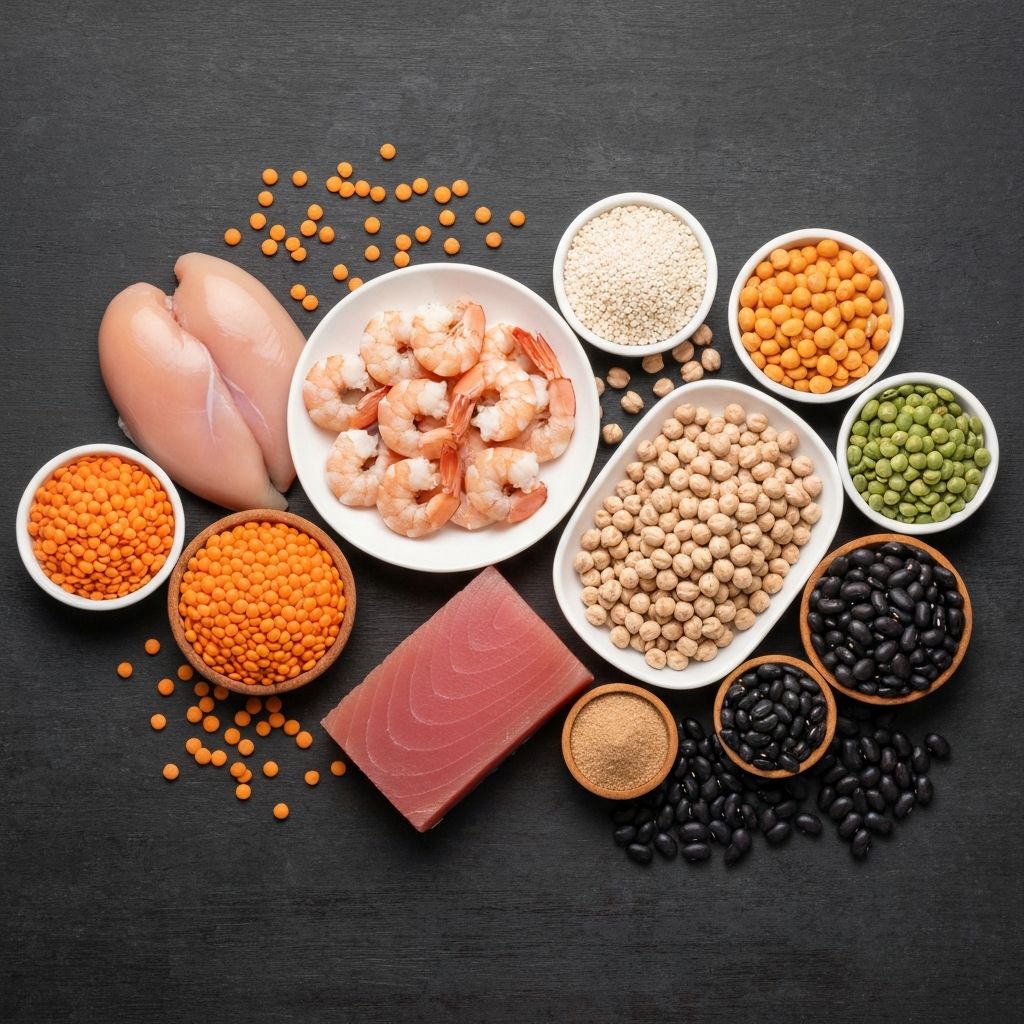
Protein is a macronutrient composed of amino acids—organic compounds that form the structural and functional basis of all body tissues. While carbohydrates and fats serve primarily as energy substrates, protein uniquely serves both energy and structural functions. Adequate protein intake supports muscle tissue maintenance and synthesis, enzyme production, immune function, and hormone formation.
Not all proteins are equivalent. Protein quality is determined by amino acid composition, particularly the presence and proportion of essential amino acids—nine amino acids that the human body cannot synthesize and must be obtained from dietary sources. These include leucine, isoleucine, valine, lysine, methionine, phenylalanine, threonine, tryptophan, and histidine.
Complete proteins contain all nine essential amino acids in adequate proportions. Animal-derived proteins (poultry, fish, eggs, dairy) are generally complete. Plant-based proteins (legumes, grains, nuts) are often incomplete but can be combined to provide all essential amino acids.
| Activity Level | Protein Requirement (g/kg body weight) | Example (70 kg person) | Purpose |
|---|---|---|---|
| Sedentary | 0.8 | 56 g/day | Maintenance of body tissues |
| Moderate Activity | 1.2-1.4 | 84-98 g/day | General health and fitness |
| Resistance Training | 1.6-2.0 | 112-140 g/day | Muscle protein synthesis and adaptation |
| Endurance Training | 1.2-1.6 | 84-112 g/day | Recovery and adaptation |
Research indicates that distributing protein intake across multiple meals promotes more consistent muscle protein synthesis than concentrating intake in one meal. Consuming approximately 25-35 grams of protein (with at least 2-3 grams of leucine) per meal appears to optimally stimulate muscle protein synthesis in adults. This principle supports consuming protein at each meal rather than concentrating it in a single large meal.
Animal Sources (Complete Proteins):
Plant Sources (Often Incomplete Proteins):
Protein exerts the strongest satiety effect among macronutrients. This occurs through multiple mechanisms: protein stimulates cholecystokinin (CCK) release, which signals fullness; it has the highest thermic effect of food (20-30% of calories), requiring substantial energy for digestion and metabolism; and protein digestion produces peptides that activate satiety signals. These properties make adequate protein intake an effective strategy for appetite management and body weight regulation.
Last Updated: March 2026